
Music For Wellbeing
Music as a Tool for Inner Growth and Wellbeing
“Indian Classical music is one of the most wonderful ways through which one can transcend one’s limitations and arrive at an ultimate possibility. There are many ways to do this but Indian classical music is a wonderful and beautiful way to do it” – Sadhguru
What we call music is just a certain structured arrangement of sound. What is music to my ears can be noise to someone else. While this is largely driven by many aspects like the times we live in, social, and other environmental aspects, we have always held classical art forms to the highest standards – in terms of – the experiences they generate, their purposes in the society and how we’ve looked at them in general. Indian Classical Music has been known to not only amuse you with various kinds of emotions through ragas, they have the power to move you into deeper states of joy and ecstasy. This is true not just with people steeped into this art form or those who come from an Indian cultural background. I’ve personally seen this music moving people from various cultural diversities, touching them soulfully, sometimes even bringing tears of joy in them. Any structured art form such as Indian Classical Music or Western Classical music that has a certain sense of geometry and mathematical patterns can have such effects because of how closely they are connected with our human system in many ways.
Today, there is substantial research done in this field to such an extent that many neuroscientists have formulated specific frequencies, known as binaural frequencies. When these frequencies or sounds enter our brain through the ears, they cancel out each other to activate specific waves in our brain, each of which serve specific purposes – such as reduce stress or anxiety, boost productivity or help with focus etc. These are synthesized artificially for specific purposes.
What we know today as the Indian Classical System of Music is a result of thousands of years of evolution and traces back to Sama Veda – which started as chants or mantras (structured sounds) which were designed to produce specific vibrations. Over many hundreds of years, these sounds found the shape and form of what we call as classical music today, through pure exploration of one’s inner self which ultimately became an outpour of emotions which became to be known as Ragas over time. That’s how most ancient ragas (which is simply put, a specific combination of sounds) were formed. While this was known to musicians of the past experientially, today scientists are exploring the sounds generated by specific ragas through meticulous lab experiments to explore it’s neurological impact on not just the very way we think, feel and emote but even other subtler physiological and physiological impact on our nervous system.
Music as a Transformative Practice
Musical pursuits can bring incredible transformation in an individual life that goes far beyond entertainment. Singing as a daily practice, as taught in Indian Classical System of Music, can do many wonders – including improved lung capacity, calming the nervous system, strengthening parasympathetic nervous system, improve core strength, improved alertness and mindfulness and many more. It’s no coincidence why most classical musicians live a long and fulfilling life, can pursue multiple careers as entrepreneurs, technologists and performers. If one looks at this pursuit from an inward experience, the journey of daily practice can become a blissful and joyful journey and the fruits of such a pursuit can fetch you far sweeter results than just a sweet voice that can entertain others 🙂
Recent Posts
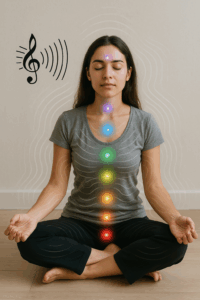
Music – a tool for inner wellbeing
03 Sep 2025
A Vocal Technique System That Actually Works
04 May 2025
Amazing exploration of sound of music into natural curing remedies. Hats off